
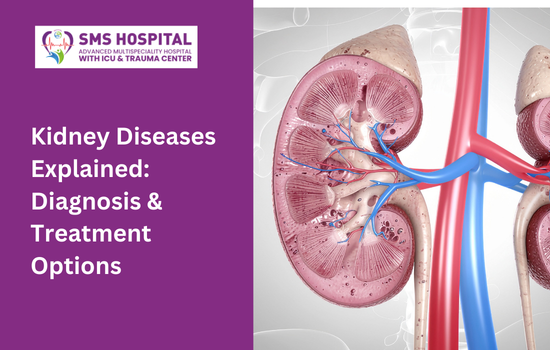
Think of your body as an expensive restaurant. Your heart is the kitchen, your brain is the manager, and your kidneys? They are the global-level team of filtration and sanitization personnel working behind the scenes. Each and every day, these two fist-sized organs sift through approximately 150 quarts of blood to get rid of waste, balance the fluids and regulate the chemicals that ensure that your heart keeps beating and your bones are strong.
But today we are experiencing a silent epidemic in 2026. Kidney disease is affecting 1 out of every 10 adults in the world, which is more than 850 million individuals. The scariest part? The majority of them do not realize until the damage is advanced. This guide will be aimed at demystifying the clinical terminologies and telling you precisely what kidney disease is, how we can spot it at an early stage and the revolutionary treatment that is offered today.
The Spectrum of Kidney Diseases: Understanding the Types
Kidney problems are not always the same. Knowledge of the lane that a patient is in defines everything including diet and medication.
Chronic Kidney Disease (CKD): The Slow Fade
The most common type is CKD which is usually called a silent condition since it builds up over time. It is most often a secondary occurrence due to long-term elevated blood pressure or diabetes which scars the delicate filters (nephrons) until they cannot sustain the load.
Acute Kidney Injury (AKI): The Sudden Spike
In comparison to CKD, AKI occurs in hours or days. It is usually brought about by serious dehydration, significant infections (sepsis) or some medications that cause the kidneys to react in shock. Although AKI is reversible, it has to be treated with immediate medical aid since it could cause irreversible scarring.
Genetic and Autoimmune Culprits
Some disorders such as Polycystic Kidney Disease (PKD) are inheritable and cysts filled with fluid grow up and ultimately crush the healthy tissues. Other autoimmune disorders, such as IgA nephropathy, include the body’s own immune system attacking the filters of the kidney.
Decoding the Tests: How Doctors “See” Kidney Health
Previously we have had to depend on such physical symptoms as swelling or fatigue. But even then, we have often found the functions already low. In 2026, we are more concerned with the Big Two figures that reflect the true state of affairs.
eGFR (Your “Efficiency” Percentage)
The glomerular filtration rate (eGFR) is an estimated blood test that would determine how well your kidneys are cleaning your blood. Imagine the battery life of your kidney.
- 90 or above: Normal function.
- 60 and lower: This is the CKD level.
- 15 and below: It implies kidney failure, in which case, replacement therapy is typically required.
UACR (The “Leakage” Test)
Urine Albumin-to-Creatinine Ratio (UACR) tests the presence of a protein known as albumin in the urine. Protein is contained in the blood by healthy kidneys. When it passes on to your urine, then it is an indication that the nets in your filters have holes. eGFR is still normal but a reading of more than 30 mg/g is a warning.
AI and 3D Imaging
The analysis of kidney scans with the aid of artificial intelligence is one of the most thrilling changes in 2026. Now AI can detect microscopic traces of scarring that the human eye may fail to detect so that doctors can forecast the likelihood of a patient to fail years before their failure occurs.
Modern Treatment Landscapes: Beyond Dialysis
Decades ago, the advanced kidney disease criterion was nothing more than waiting until it fails and then initiating dialysis. The modern world is interested in prevention and preservation.
The “Flozin” Revolution (SGLT2 Inhibitors)
Initially created to treat diabetes, such medications as dapagliflozin and empagliflozin (SGLT2 inhibitors) have become the holy grail of kidney education. They do so by reducing the inside pressure of the kidney filters, which basically provides the organ with rest.
Precision Medicine and Gene Editing
The age of individual nephrology is coming on. In case of genetic disorders such as PKD, scientists are starting to apply CRISPR technology of gene editing in a clinical trial to switch the genes that cause cysts. There is also a tailoring of new immunotherapies on the basis of specific genetic markers of a patient to prevent autoimmune attacks.
Transplant Innovations: Machine Perfusion
The gold standard of failure is transplantation, which is not of great abundance in the form of donor organs. Normothermic Machine Perfusion (NMP) will transform it in 2026. This is the technology that preserves the operation of a kidney donor at room temperature as it breathes outside the body. This does not only enable the doctors to examine the health of the kidney prior to surgery; it also enables the repair of slightly damaged kidneys that would otherwise have been thrown away.
Protecting Your Filters: Proactive Steps
You do not have to be a medical graduate to save your kidneys. It is a matter of control of the Big Two, which are blood sugar and blood pressure.
- The Salt and Sugar Strategy: High blood pressure is caused by too much salt, and too much sugar is harmful to small blood vessels. Goal of less than 2,300 mg of sodium per day.
- The NSAID Trap: To be toxic to the kidneys (nephrotoxic) requires taking frequent doses of such common over the counter pain medications as ibuprofen or naproxen. You should never go without consulting a doctor in case you require long-term pain management.
- Hydration Wisdom: The rule that states that one has to drink 8 glasses of water a day is well known, but the point is that one should drink water regularly. Kidney stones and acute injury are the most common causes of dehydration in warmer climates.
Conclusion
Kidney disease no longer is a death sentence with no pre-determined final end. The ongoing advances in SGLT2 inhibitors, AI diagnostics, and organ preservation in 2026 have given us the most substantial tools to stop the process of renal decline.
The best thing that you can do is to know your numbers. A basic blood and urine test in your next check-up would actually save your life.