SMS Hospital Vadodara

Get an Appointment

Our simple to use, online appointment process makes it easy for you to book for any one of our services and doctors.

Get an Appointment

Our simple to use, online appointment process makes it easy for you to book for any one of our services and doctors.

Critical Care Medicine in Vadodara

SMS Hospital provides critical care medicine in Vadodara for patients with severe illnesses, serious injuries and conditions that may become life-threatening. Critical care is generally provided in an Intensive Care Unit, where patients receive close observation and treatment according to their medical needs. The purpose is to stabilise the patient, support vital body functions and treat the main cause of the illness or injury.

A critically ill patient may need care from several specialists at the same time. The Critical Care Medicine Department at SMS Hospital follows a coordinated approach involving doctors, trained nurses, technicians, physiotherapists, dieticians, counsellors and other healthcare professionals. The team plans care based on the patient’s condition, reports and response to treatment.
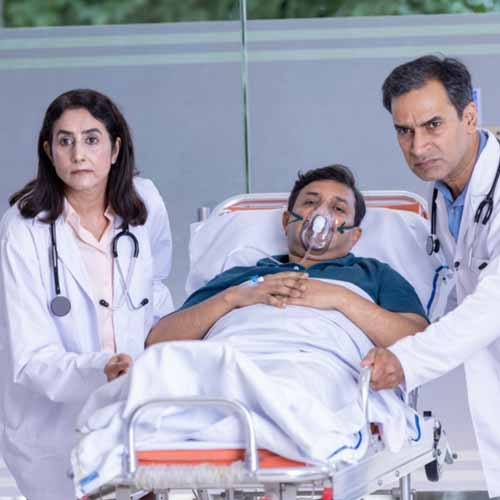
What Is Critical Care Medicine?

Critical care medicine focuses on patients who need intensive treatment and close monitoring. Such patients may have difficulty breathing, unstable blood pressure, severe infection, organ failure, major trauma or complications after surgery. Their condition can change quickly, so timely observation and clinical decisions are important.

The team monitors heart rate, breathing, blood pressure, oxygen level and other important signs. Tests may be advised to understand the cause and severity of the condition. Treatment is personalised because every patient has different medical needs and risks.

24/7 Critical Care Medicine in Vadodara

SMS Hospital offers 24/7 Critical Care Medicine in Vadodara for patients who need urgent assessment and intensive support. Round-the-clock availability helps the medical team observe changes, respond to emergencies and coordinate care without unnecessary delay.

Patients may be admitted through the emergency department, after major surgery or after transfer from another unit. The critical care team reviews the patient’s condition and adjusts the treatment plan when required. Family members are also informed about progress and important decisions.

Recovery depends on the type and severity of illness, age, existing conditions and response to treatment.

Conditions Managed in Critical Care

The department supports patients with serious or life-threatening conditions, including:

The treating team decides whether ICU admission is required based on clinical findings, reports and the level of support needed.

Care for Respiratory Failure and Severe Pneumonia

Respiratory failure occurs when the lungs cannot provide enough oxygen to the body or remove carbon dioxide properly. Severe pneumonia, serious infections, lung disease and major injuries can affect breathing. Such patients may require close oxygen monitoring and respiratory support as advised by the medical team.

The critical care team monitors oxygen levels, breathing patterns and signs of infection. It also coordinates with pulmonology, medicine and other specialists when needed.

Critical Care for Sepsis and Serious Infections

Sepsis is a life-threatening response to an infection and requires urgent medical care. A patient may develop fever or low body temperature, confusion, breathing difficulty, low blood pressure, weakness or reduced urine output.

The team works to identify the possible source of infection, monitor organ function and begin treatment based on the doctor’s assessment. Early recognition and timely hospital care are important in managing sepsis and reducing complications.

Emergency Trauma Center in Vadodara

Patients searching for an emergency trauma center in Vadodara may need immediate care after road accidents, falls, workplace injuries, burns or other serious events. SMS Hospital provides emergency and critical-care support for trauma patients and coordinates with surgical, orthopaedic, neurosurgical and other departments according to the injury.

Trauma care begins with a rapid assessment of breathing, circulation, consciousness and visible injuries. Doctors may recommend tests, imaging or emergency procedures. Patients who are unstable or need continuous observation may be shifted to critical care.

Do not move a person with a suspected head, neck or spine injury unless there is an immediate danger. Contact emergency medical services and follow professional instructions.

Role of a Critical Care Specialist in Vadodara

A Critical Care Specialist in Vadodara, also known as an intensivist, evaluates and manages patients with severe and complex conditions. The specialist reviews vital signs, reports, medicines, organ function and response to treatment.

The specialist may coordinate with cardiologists, neurologists, nephrologists, pulmonologists, surgeons and other doctors. This approach is useful when a patient has several health problems or requires treatment from more than one department.

The specialist also communicates with the patient’s family about the condition, care plan and possible next steps.

Critical Care After Major Surgery

Some patients require intensive monitoring after major cardiac, neurological, abdominal, orthopaedic or cancer surgery. Admission may be planned before surgery or decided after the procedure.

The team monitors recovery from anaesthesia, breathing, blood pressure, pain, bleeding and other factors. The patient is transferred to a regular ward when intensive monitoring is no longer required.

Multidisciplinary Critical Care Team

Critical care involves a team of specialists, nurses, technicians, physiotherapists, dieticians, counsellors and doctors from other departments.

Nurses provide bedside observation and carry out the treatment plan. Physiotherapists may support breathing exercises and movement when suitable. Dieticians help plan nutrition. Counsellors may support patients and families during a difficult hospital stay.

Why Choose SMS Hospital for Critical Care?

SMS Hospital provides critical care within a multispeciality hospital environment, helping the team coordinate with different medical and surgical departments when specialised evaluation is required.

Key aspects include:

Treatments and procedures are recommended according to clinical need and current availability.

When Should You Seek Emergency Medical Care?

Seek urgent help for severe chest pain, sudden breathing difficulty, loss of consciousness, signs of stroke, uncontrolled bleeding, a major accident, severe burns, seizures, confusion or rapid decline after an infection.

Do not wait for an online appointment in a life-threatening situation. Call the hospital’s emergency number or go to the nearest emergency department immediately.

Contact SMS Hospital

For information about critical care medicine in Vadodara, contact SMS Hospital at 2nd and 3rd Floor, Ganesh Plaza, above the Hyundai showroom, near Maneja Crossing, Makarpura, Vadodara. For a medical emergency, call 81412 29911.

Frequently Asked Questions

It provides close monitoring and intensive treatment for severe illness, major injury or life-threatening complications.

Yes. The hospital lists critical care and medical emergency support as available 24 hours a day.

ICU care may be needed for respiratory failure, sepsis, stroke, heart attack, kidney failure, severe pneumonia, trauma, burns or surgical complications.

A specialist manages severely ill patients, monitors vital functions and coordinates care with other medical and surgical teams.

Yes. Trauma is listed among the serious conditions managed by the Critical Care Medicine Department.

Visiting rules depend on the patient’s condition and hospital policy. Ask the hospital team for current guidance.

Bring identification, previous reports, current medicines, allergy details and insurance documents when available. Do not delay emergency care to collect paperwork.

Call the 24-hour medical emergency number at 81412 29911 and seek immediate help for life-threatening symptoms.