
- Home
- About
- Departments
- Robotic Joint replacement
- Spine Endoscopy
- Fetal Medicine
- Obstetrics and Gynecology
- Orthopedics and Joint Replacement
- General Surgery and Gastro Surgery
- Ears, Nose, and Throat (ENT)
- Nephrology
- Pain Management
- Neurology
- Urology
- Pulmonology
- CVTS Cardio Thoracic
- Intervention Radiology
- Medicine
- Surgical Gastroenterology
- Medical Oncology
- Oral and Maxillofacial Surgery
- Surgical oncology
- Critical Care Medicine
- Diabetology and Endocrinology
- Neurosurgery
- Cardiology
- Medical Gastroenterology
- Pediatric & NICU PICU
- Gallery
- Blog
- International Patients
- Contact Us
Sleep Apnea and Snoring When to Consult a Specialist for Restful Sleep
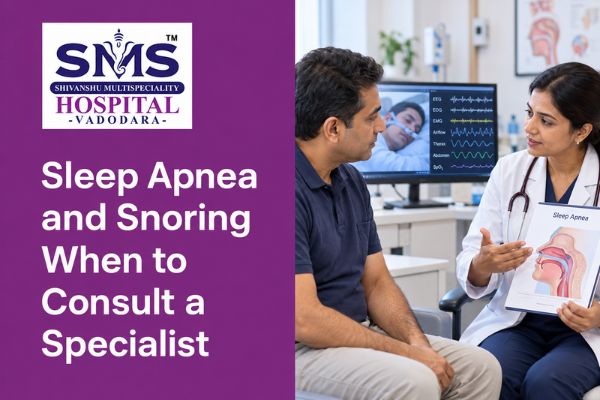
When Snoring Needs More Than a Home Remedy
Arrange a medical assessment if frequent snoring comes with witnessed breathing pauses, gasping during sleep or persistent daytime sleepiness. Snoring alone does not confirm sleep apnea, but these additional symptoms deserve attention.
Perhaps your family has noticed noisy breathing while you feel tired despite spending enough time in bed. The useful next step is to describe that pattern to a doctor. A consultation can help identify whether sleep-related breathing problems or another condition need investigation.
What Is the Difference Between Snoring and Sleep Apnea
Snoring is the sound produced when tissues in the upper airway vibrate during sleep. Sleep apnea involves repeated interruptions in breathing.
In obstructive sleep apnea, the upper airway repeatedly narrows or becomes blocked. Central sleep apnea involves problems with the signals that control breathing. These conditions require different assessments.
Some people snore without having sleep apnea. Others may have a breathing disorder without recognising the nighttime signs themselves. The volume of snoring is therefore not a reliable way to judge its seriousness.
Symptoms Worth Discussing With Your Doctor
A partner or family member may notice symptoms before the person affected does. Mention the following during your consultation:
- Frequent loud snoring.
- Breathing pauses followed by snorting or gasping.
- Unrefreshing sleep and daytime sleepiness.
- Morning headaches or a dry mouth.
- Repeated awakenings or difficulty staying asleep.
- Trouble concentrating during routine activities.
These symptoms can have several causes. A medical assessment helps determine which investigations are appropriate.
If sleepiness affects your ability to drive safely, avoid driving and seek prompt medical advice. Severe breathing difficulty while awake, blue lips or chest pain requires urgent medical attention.
Which Specialist Should You Consult
A doctor experienced in sleep medicine can assess suspected sleep apnea. Depending on your symptoms and local availability, the consultation may involve a pulmonologist or an ENT specialist.
A pulmonologist evaluates breathing-related concerns and can guide further sleep assessment. An ENT doctor can examine nasal, throat, tonsil or other upper-airway factors contributing to snoring.
Tell the appointment team about both nighttime symptoms and daytime sleepiness. This helps arrange a suitable consultation rather than treating the appointment as a discussion about snoring alone.
What Happens During the First Consultation
The doctor will ask about sleep habits, symptoms, existing conditions and current medicines. Relevant information may include blood pressure problems, previous airway treatment and observations from someone who shares your bedroom.
An examination and symptom questionnaires can help guide the assessment. Questionnaires estimate risk; they do not establish the diagnosis by themselves.
The doctor may recommend a sleep study or other investigations based on the findings. Avoid assuming that every patient needs the same test or that tiredness always means sleep apnea.
How a Sleep Study Helps
A sleep study records information about breathing and other body functions during sleep. A laboratory study can also measure sleep stages, helping the clinician assess the type and severity of a sleep disorder.
A medically ordered home sleep apnea test may suit some adults with suspected obstructive sleep apnea. It is not appropriate for everyone.
The doctor chooses the test according to symptoms and medical history. If a home test is negative or unclear but concerns remain, further assessment, often a laboratory study, may be needed. Ask how results will be interpreted and when they will be reviewed.
Can a Smartwatch Explain Your Sleep Problem
A smartwatch, snoring app or wearable alert may provide information worth sharing with your doctor. However, consumer screening tools cannot confirm sleep apnea or reliably rule it out.
Bring any useful recordings or device reports to the appointment, but also describe how you feel during the day. A reassuring sleep score should not outweigh persistent symptoms or witnessed breathing pauses. Medical evaluation remains necessary when concerns continue.
What Treatment May Involve
Treatment depends on the diagnosis, severity, airway findings and other health conditions. For obstructive sleep apnea, a doctor may discuss positive airway pressure, such as CPAP, which helps keep the airway open during sleep.
Other options may include a fitted oral appliance, suitable lifestyle changes or selected procedures. Surgery is considered for particular patients after assessment.
Weight management, regular sleep habits, limiting alcohol and addressing smoking may form part of the plan. Some patients may benefit from changes in sleeping position.
Do not start, stop or adjust prescribed treatment without guidance. Follow-up helps review comfort, symptoms and whether treatment is working.
Preparing for a Sleep Related Consultation in Vadodara
Before your visit, note bedtime, waking time, nighttime awakenings and daytime sleepiness over several days. Bring prescriptions, previous sleep reports and relevant medical records.
If possible, ask a family member to describe observed breathing pauses or gasping. Mention work shifts and any safety concerns caused by sleepiness.
SMS Hospital in Makarpura, Vadodara, provides pulmonology consultation and ENT assessment for relevant breathing and airway concerns. Contact the hospital to arrange an appointment and confirm recommended testing arrangements.
Conclusion
Frequent snoring deserves assessment when it accompanies breathing pauses, gasping or daytime sleepiness. A suitable consultation helps clarify the cause, decide whether testing is needed and discuss treatment based on the findings. Bring clear symptom information so the appointment can focus on your actual concerns.
Frequently Asked Questions
Persistent snoring can still be discussed with a doctor, particularly if someone notices breathing pauses or gasping. The clinician will assess other symptoms and risk factors before recommending investigations.
Start by asking about a clinical assessment. The doctor should decide whether testing is needed and which type is suitable. Confirm the referral process and test preparation requirements when booking.
Charges depend on the consultation and the type of test recommended. Ask for separate costs for assessment, testing, report interpretation and follow-up. Confirm current charges and insurance requirements directly with the hospital.
Return to the doctor with the result and describe your continuing symptoms. A negative home test may need further investigation, particularly when there is ongoing concern about obstructive sleep apnea.
Treatment is individual. CPAP is commonly used for obstructive sleep apnea, but the doctor may discuss other options according to severity, suitability and tolerance. Ask how effectiveness will be monitored.
Yes. Bring the complete sleep study report, previous prescriptions and proposed treatment plan. Ask the reviewing doctor to explain the diagnosis, treatment choices and expected follow-up.
Children need an age-appropriate assessment. Discuss persistent snoring or breathing pauses with a paediatrician or suitable ENT specialist. Adult home-testing pathways should not be assumed appropriate for children.